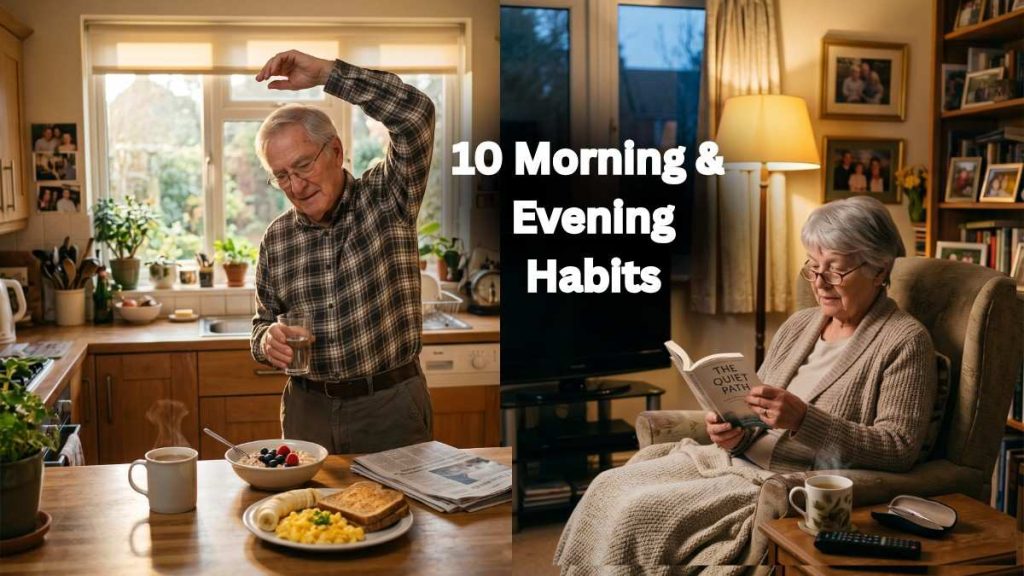
At 70, 75, or even 80, many people wake up thinking that stiffness, weakness, or fatigue are simply “part of aging.” But if you look closely at the Healthy Seniors the ones who walk with energy, laugh with ease, and sleep soundly — you’ll notice something different. They don’t accept decline as inevitable. Instead, they build small rituals into their mornings and evenings that keep their bodies strong and their minds sharp. These habits aren’t complicated, and they don’t require expensive supplements or fancy gyms. They’re simple choices, repeated daily, that add up to vitality. And the best part? Anyone can start them today.
Essential Daily Rituals for Healthy Seniors
1.The Emotional Side of Habits for Healthy Seniors Healthy seniors don’t roll out of bed and slump into a chair. They stretch, walk, or do light exercises within minutes of waking. This gentle activity wakes up circulation, loosens stiff joints, and signals the brain that the day is worth embracing. One man in his late 70s swears by five minutes of arm circles and leg stretches before coffee — he says it keeps him feeling “alive instead of rusty.”
2. They hydrate before caffeine. Coffee may be comforting, but water is essential. Seniors who thrive often drink a glass of water first thing in the morning. Overnight, the body loses fluids, and dehydration can cause dizziness or fatigue. That simple glass of water acts like oil in an engine, helping everything run smoothly. Some even add a slice of lemon for a refreshing kick.
3. They eat protein-rich breakfasts. Skipping breakfast or relying on sugary cereals leaves energy crashing by mid-morning. Healthy seniors know that muscles need protein to stay strong. Eggs, yogurt, or even a handful of nuts can make a huge difference. One woman in her 80s says her morning omelet is her “secret weapon” against weakness — she feels steady and focused all day.
4. They practice gratitude or reflection. It’s easy to wake up worrying about aches or appointments. But seniors who stay mentally resilient often pause to reflect on something positive. Some write a quick note in a journal, others simply whisper thanks for another day. This habit isn’t about ignoring problems; it’s about setting the tone. A grateful mind tends to notice opportunities instead of obstacles.
5. They keep mornings uncluttered. Healthy seniors avoid rushing through chaotic mornings. They prepare clothes the night before, keep essentials in easy reach, and follow a routine that minimizes stress. This calm start reduces anxiety and preserves energy for more important tasks. One retired teacher says, “I treat my mornings like sacred ground no clutter, no rushing, just rhythm.”
6. They walk or move outdoors. Fresh air and sunlight are natural medicine. Seniors who step outside daily often enjoy better mood, stronger bones, and sharper sleep cycles. Even a 10-minute walk around the block can lift spirits. The healthiest seniors treat outdoor time as non-negotiable, like brushing their teeth. It’s not exercise alone it’s connection with the world.
7. They avoid heavy dinners. Evening habits matter just as much. Seniors who eat large, late meals often struggle with digestion and poor sleep. Healthy seniors keep dinners lighter, focusing on vegetables, lean proteins, and smaller portions. They know that going to bed with a heavy stomach leads to restless nights. One man in his 70s jokes, “I eat like a king at lunch, but a monk at dinner.”
8. They wind down with calming rituals. Instead of watching loud TV shows until midnight, healthy seniors create soothing routines. Reading, listening to soft music, or sipping herbal tea signals the body to relax. These rituals aren’t about boredom — they’re about teaching the brain that night is for rest. Over time, the body learns to fall asleep naturally, without pills.
9. They keep screens away from the bedroom. Blue light from phones or tablets disrupts sleep hormones. Seniors who protect their sleep often banish screens from the bedroom. They replace scrolling with conversation, prayer, or quiet reflection. This small boundary makes a big difference in sleep quality. One grandmother says, “My phone sleeps in the kitchen, not next to me.”
10. They respect bedtime consistency. Healthy seniors don’t treat bedtime like a guessing game. They go to bed at roughly the same time each night, even on weekends. This consistency trains the body’s internal clock, making sleep deeper and mornings easier. It’s not about being rigid — it’s about honoring the rhythm that keeps energy steady.
Why Morning Momentum Matters for Healthy Seniors
Healthy seniors don’t just follow these habits mechanically — they weave them into their identity. Each choice becomes part of how they see themselves: strong, capable, and worthy of good health. That mindset is powerful. It’s the difference between saying “I’m old, so I can’t” and “I’m older, so I must.”
Take the story of Maya, a 74-year-old grandmother who once struggled with constant fatigue. She thought slowing down was inevitable. But when she began walking every morning, drinking water before coffee, and keeping her evenings calm, she noticed something remarkable: her energy returned. Within months, she was playing soccer with her grandchildren. Her doctor told her, “You’re aging backward.” What changed wasn’t just her body it was her daily rhythm.
Morning habits build momentum. The healthiest seniors treat mornings like a launchpad. They know that the first hour sets the tone for the rest of the day. A sluggish start often leads to sluggish choices. But a morning filled with movement, hydration, and gratitude creates momentum. That momentum carries into meals, conversations, and even sleep. It’s not about perfection; it’s about stacking small wins early.
Evening habits protect recovery. Equally important is how the day ends. Seniors who thrive don’t sabotage their nights with heavy meals, late-night screens, or chaotic schedules. They respect the body’s need for rest. Sleep isn’t just downtime it’s repair time. Muscles rebuild, memory consolidates, and hormones balance. By protecting evenings, they protect tomorrow’s energy.
Curiosity keeps them young. Another overlooked habit among healthy seniors is curiosity. They read, learn, and explore new hobbies. This mental engagement keeps the brain flexible. One 82-year-old man started learning Spanish during retirement. He says it keeps his mind “buzzing with life.” The healthiest seniors don’t stop growing; they simply grow differently.
Connection matters more than isolation. Loneliness is a silent killer. Seniors who stay healthy often nurture relationships. They call friends, join community groups, or spend time with family. These connections reduce stress and boost emotional resilience. A daily phone call or evening tea with a neighbor can be as vital as vitamins.
They listen to their bodies. Healthy seniors don’t ignore signals. If they feel pain, they adjust. If they feel tired, they rest. This self-awareness prevents small issues from becoming big problems. One woman in her late 70s noticed her knees aching after long walks. Instead of quitting, she switched to swimming. Her habit wasn’t exercise itself — it was listening.
They celebrate small victories. The healthiest seniors don’t wait for dramatic transformations. They celebrate small wins: walking an extra block, sleeping through the night, or cooking a balanced meal. These victories build confidence. Confidence fuels consistency. And consistency is the real secret to longevity.
Practical steps for anyone starting today:
- Begin with one habit, not all ten.
- Choose the easiest change — maybe drinking water before coffee.
- Stick with it for a week, then add another.
- Track how you feel, not just what you do.
- Share your progress with someone you trust.
The emotional side of habits. Behind every routine is an emotion. Seniors who thrive often tie habits to feelings of joy, pride, or peace. A morning walk isn’t just exercise it’s a chance to greet the sunrise. A light dinner isn’t just digestion it’s comfort before sleep. By attaching emotion to action, habits become meaningful instead of mechanical.
The bigger picture. When you look at the healthiest seniors, you don’t see people obsessed with rules. You see people who respect their bodies, honor their minds, and cherish their evenings. Their habits aren’t restrictions; they’re freedoms. Freedom to move without pain. Freedom to sleep without struggle. Freedom to laugh without fatigue.
Closing thought. Aging doesn’t have to mean decline. It can mean refinement. The healthiest seniors prove that vitality is built, not inherited. Their mornings and evenings are not glamorous, but they are powerful. And the beauty is that anyone at 50, 60, or 90 can begin today.
So tomorrow morning, before coffee, before complaints, before excuses drink that glass of water. Stretch. Step outside. Whisper gratitude. And tomorrow night, eat lightly, turn off the screens, and let calmness guide you to sleep. These are not just habits. They are gifts you give yourself, every single day.