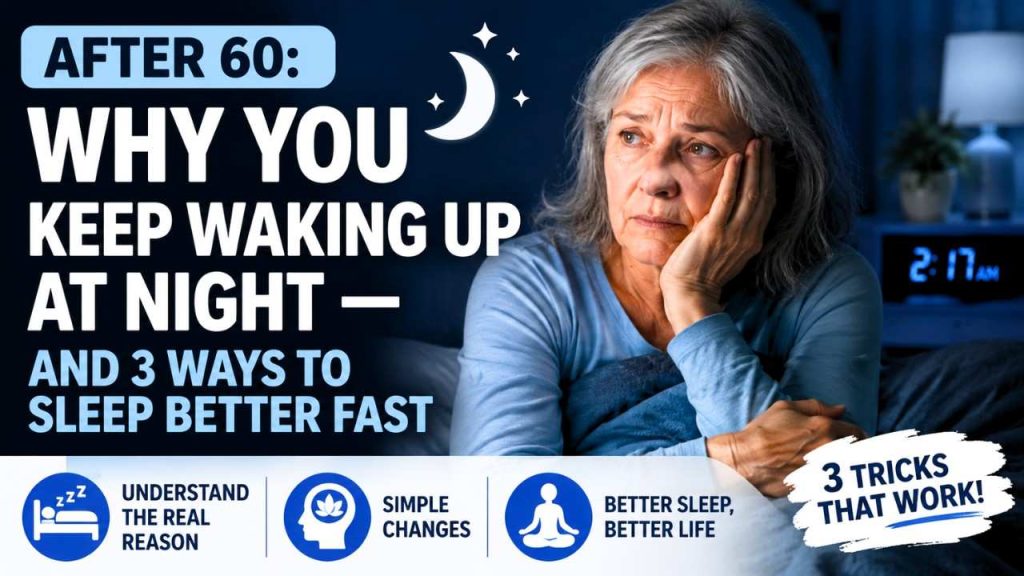
You slept eight hours. The clock says morning, but your body says otherwise. Heavy eyelids, stiff muscles, and that strange fog in your head — it feels like you never rested at all. Many adults over 60 quietly ‘Why Sleep Feels Broken After 60’ accept this as “normal aging.” It isn’t. Broken sleep is more than an annoyance; it’s a warning sign. Something inside your body is misfiring, and ignoring it can steal your energy, weaken your memory, and even raise your risk of illness. The good news? Small daily changes can reset your nights — and bring back mornings that feel alive again. ‘Why Sleep Feels Broken After 60’
The Real Reason Why Sleep Feels Broken After 60
Why Sleep Breaks After 60
Sleep doesn’t suddenly collapse at 60, but subtle shifts in the body make it fragile. Hormones that once kept your sleep cycles steady begin to decline. Melatonin — the natural “sleep signal” — drops. Cortisol, the stress hormone, rises more easily. Add in aches, medications, or late‑night worries, and the result is fractured rest. You wake up often, toss and turn, or feel like your dreams never reach the deep stage where true recovery happens.
The danger isn’t just fatigue. Poor sleep chips away at immunity, slows healing, and even accelerates memory loss. That’s why fixing it matters. ‘Why Sleep Feels Broken After 60’
Trick #1: Reset Your Evening Light
Here’s the hidden culprit most people overlook: light. After 60, your eyes let in less blue light during the day, which confuses your brain’s clock. By evening, the body doesn’t know it’s time to shut down.
The fix:
- Spend at least 20 minutes outside in natural daylight before noon.
- At night, dim lamps and avoid glowing screens an hour before bed.
- If you must use a phone or TV, switch to “night mode” or wear amber glasses.
This simple reset tells your brain: day is over, night has begun. Within weeks, many seniors notice deeper, longer sleep. ‘Why Sleep Feels Broken After 60’
Trick #2: The Magnesium Secret
Many people over 60 wake up stiff, restless, or with leg cramps. Often, the missing piece is magnesium — a mineral that calms muscles and nerves. Modern diets don’t provide enough, and aging bodies absorb less.
The fix:
- Add magnesium‑rich foods: pumpkin seeds, spinach, almonds.
- If your doctor approves, try a gentle magnesium supplement before bed.
- Even better, soak feet in warm water with Epsom salt — magnesium absorbs through the skin.
The result? Muscles relax, the nervous system quiets, and sleep feels less like a battle.
Trick #3: The “Wind‑Down Ritual”
Here’s the truth: the body doesn’t fall asleep on command. It needs a ritual. Without one, you carry the day’s stress straight into bed.
The fix:
- Choose a calming routine: gentle stretches, slow breathing, or reading a light book.
- Keep it consistent — same time, same steps every night.
- Avoid heavy meals or alcohol late in the evening; they disrupt deep sleep.
Think of it as teaching your body a bedtime story. Within minutes, your pulse slows, your mind softens, and sleep arrives naturally.
The Emotional Side of Broken Sleep
Sleep problems aren’t just physical. They carry emotional weight. Waking up exhausted makes mornings feel hopeless. It steals motivation to exercise, cook healthy meals, or meet friends. Over time, this isolation feeds anxiety and depression.
That’s why fixing sleep isn’t vanity — it’s survival. Rest is the foundation of joy, clarity, and resilience. Seniors who reclaim their nights often describe it as “getting life back.”
Real Stories
- Maya, 68: “I thought waking up at 3 a.m. was just part of aging. Once I started my evening walk and cut late TV, I began sleeping through the night again.”
- Hari, 72: “Magnesium changed everything. My cramps stopped, and I finally wake up refreshed.”
- Sita, 65: “My bedtime ritual is tea and a short prayer. It signals my body to let go. I sleep peacefully now.”
These aren’t miracles. They’re small, practical shifts anyone can try. ‘Why Sleep Feels Broken After 60’
What Broken Sleep Is Really Saying
If you’re over 60 and mornings feel broken, don’t ignore it. Sleep troubles are often the body’s way of whispering: I need balance. Sometimes it’s light, sometimes nutrition, sometimes stress. The key is listening. ‘Why Sleep Feels Broken After 60’
Doctors can help rule out deeper issues like sleep apnea or thyroid imbalance. But for many, the three tricks above are enough to restore natural rhythm.
Why Sleep Feels Broken After 60 for Many Seniors
Good Massage
Imagine waking up after 60 with clear eyes, steady energy, and a mind ready for the day. That’s not a fantasy — it’s the reward of fixing broken sleep. You don’t need expensive gadgets or complicated routines. Just daylight in the morning, magnesium in the evening, and a calming ritual at night. Three simple steps. Three powerful changes.
Your body is waiting to rest the way it was designed to. Don’t settle for exhaustion. Start tonight, and tomorrow morning may feel like the first real sunrise in years. ‘Why Sleep Feels Broken After 60’