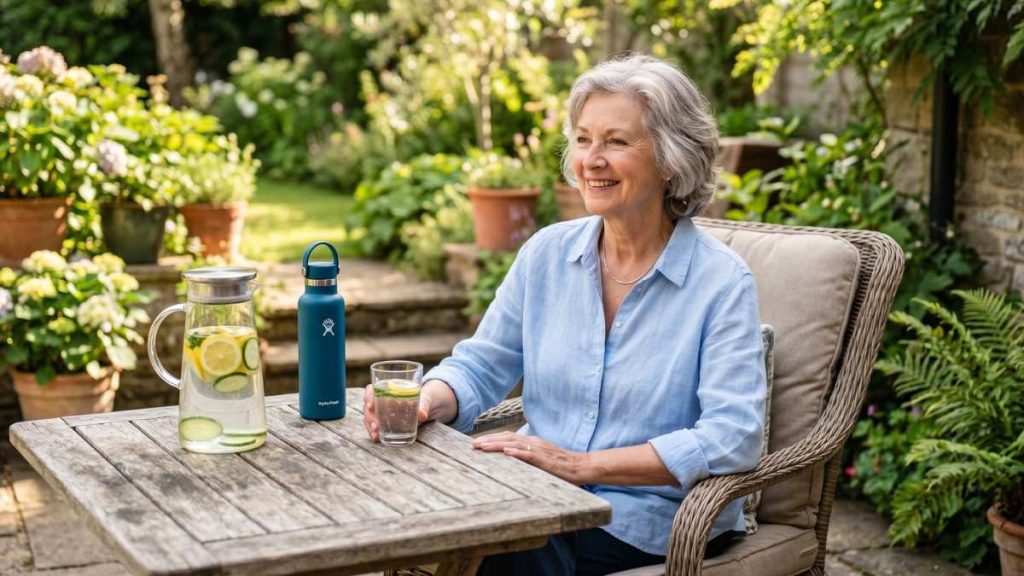
It’s a warm, sunny afternoon. You’ve spent the last two hours busy in the garden, organizing your garage, or walking around the neighborhood. You finally sit down on the porch to relax. You feel a little tired, maybe a bit lightheaded, and your joints feel unusually stiff. why you don’t feel thirsty
But there’s one strange thing: You don’t feel thirsty at all.
Naturally, you assume that if your body needed water, it would tell you. So, you skip the glass of water and carry on with your day.
When you are over 60, this exact assumption can become a dangerous trap. The truth is, one of the most significant changes that happens to our bodies as we age is the gradual breakdown of our natural alarm systems.
Let’s look into the biological mystery of why you don’t feel thirsty anymore, the hidden risks of dehydration, and how to safely fuel your body with the exact amount of water it needs to thrive.
The Biological Disconnect: Why the Thirst Alarm Fades
To protect your health, you first need to understand that thirst isn’t just a dry feeling in your mouth. It is a highly complex communication loop between your bloodstream and your brain. (why you don’t feel thirsty)
When your body’s water levels drop, the concentration of salt in your blood increases. Tiny sensors in your brain, specifically in a region called the hypothalamus, instantly detect this change. In a younger person, the brain immediately fires off a powerful signal: “Drink water now!”
[Water Levels Drop] > [Brain Sensors Detect Salt Rise] > [Thirst Alarm Signals Fades with Age] > [Dehydration Sets In Unnoticed]
However, as we cross the age of 60, those neural sensors in the hypothalamus slowly become less sensitive. The communication link stretches out. Your body could desperately need fluids to lubricate your joints and help your kidneys flush out waste, but the brain simply delays sending the thirst memo.
By the time an older adult actually feels a dry mouth or true thirst, they are likely already living in a state of mild to moderate dehydration.
3 Hidden Signals of Dehydration (That Have Nothing to Do with Thirst)
Since you cannot completely trust your body’s thirst alarm anymore, you have to learn to read the secondary warning signs your body leaves behind.
If you experience any of these three symptoms, it’s time to reach for a glass of water immediately:
- The Afternoon Brain Fog: If you suddenly find yourself struggling to focus, feeling unusually irritable, or experiencing a mild headache around 3:00 PM, don’t blame it automatically on poor sleep. Your brain tissue is made up of roughly 75% water; even a tiny drop in hydration causes brain cells to shrink, causing instant fatigue.
- Unexplained Muscle Cramps and Joint Pain: Water acts as the essential cushion and shock absorber inside your joints. When fluids run low, friction increases, leading to more intense arthritis pain and sudden, painful muscle spasms in your calves during the night.
- The Color Test (The Ultimate Indicator): The easiest way to monitor your hydration level is in the bathroom. If your urine is dark yellow, amber, or cloudy, your kidneys are struggling to process waste with too little liquid. You want to aim for a pale, clear lemonade color.
How Much Fluid Do You Actually Need?
You have probably heard the classic rule: “Drink 8 glasses of water every single day.” While that is a decent baseline, hydration needs after 60 are deeply personal. It depends heavily on your weight, your activity level, and the prescription medications you might be taking (such as blood pressure pills, which act as diuretics).
As a general and safe baseline rule, most health experts recommend that older men aim for roughly 2.5 to 3 liters of total fluids per day, while older women should target about 2 liters.
Important Safety Note: If you have been diagnosed with chronic kidney disease or congestive heart failure, your body may process fluids differently. Always consult your primary doctor to discover your specific, safe daily fluid limit.
https://youtu.be/-DdoTGivTQQ?si=Qvmv_4sLcmyEkP1g
4 Effortless Ways to Stay Hydrated (Without Gulping Water All Day)
If the thought of forcing yourself to chug down giant glasses of plain, boring water all afternoon sounds exhausting, don’t worry. You can keep your hydration levels perfect with these simple lifestyle modifications: ”why you don’t feel thirsty”
1. Eat Your Water
You don’t have to get all your hydration from a cup. Roughly 20% of our daily fluid intake naturally comes from the foods we eat. Focus on adding high-water-content fruits and vegetables to your meals.
- Top choices: Watermelon, cucumbers, strawberries, oranges, tomatoes, and crisp zucchini.
2. The Habit Stacking Strategy
Link a small glass of water to an activity you already do every single day without fail.
- The Plan: Drink one small glass right after you brush your teeth in the morning, one glass with your afternoon vitamins, and another glass whenever you sit down to watch your favorite evening news program.
3. Upgrade the Flavor Profile
If plain water bores you, trick your palate. Keep a beautiful glass pitcher in your refrigerator packed with sliced lemons, limes, fresh mint leaves, or cucumber slices. The refreshing taste makes drinking water feel like a treat rather than a medical chore.https://youtu.be/-DdoTGivTQQ?si=Qvmv_4sLcmyEkP1g
4. Invest in a Visual Tracker
Buy a lightweight, reusable water bottle and place it right on your coffee table or kitchen counter where you can see it throughout the day. A visual reminder completely bypasses your broken internal thirst alarm.
Conclusion: Take Control of Your Daily Flow
Aging brings a lot of wisdom, but it also means we have to be smarter about how we care for our physical engines. You can no longer wait for a dry throat to tell you when it’s time to hydrate. why you don’t feel thirsty
https://youtu.be/-DdoTGivTQQ?si=Qvmv_4sLcmyEkP1g
By understanding exactly why you don’t feel thirsty anymore, you can shift from a reactive mindset to a proactive one. Keep that colorful water bottle nearby, enjoy juicy fruits, check your daily energy levels, and keep your body moving smoothly and vibrant through your golden years! why you don’t feel thirsty